
Introduction
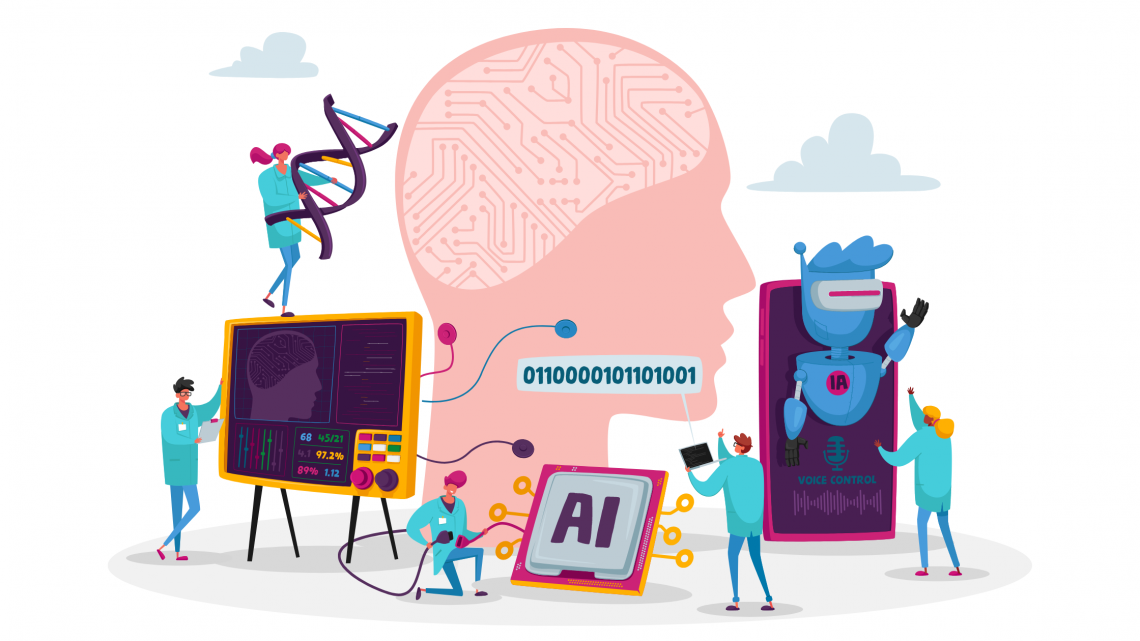
At a point in history, creativity and innovation were human activities. The law recognized that and sought to preserve the continuity of both through intellectual property rights. The same innovative venture of humans brought about a higher level of computerized systems that could not just help but carry out creative endeavours by themselves with minimal or no human intervention. It is in this later stage that artificial intelligence finds visibility.
[1] Over the years, this possibility continues to be confirmed as machines engage in intelligent interactions with humans, map navigation and direction, manufacturing, and making recommendations, in addition to the rise of conversational bots, self-driving cars, and speech recognition software, among others. In essence, we interact frequently with the activities of artificial intelligence through various artificial intelligence technologies like Siri, Google Assistant, Cortana, Grammarly, Numeria, Google Maps, and Tesla’s self-driving cars, amongst others.[2]
In creative ventures, Artificial intelligence is being applied in a manner to learn from data it receives and past experiences which enables it to improve over time in its activities. Hence, human involvement in AI creative ventures is usually limited to the provision of data, leaving no need for constant human instructions and allowing AI to apply logic, and make contextual decisions based on data and past experiences.
A few examples are worth being pointed out. There is the humanoid robot named Sophia which produced a non-fungible token (NFT)-based digital painting, which sold for $688,888; a Japanese computer program whose short novel reached the second round of a national literary competition; a computer that created a 3D printed painting called the ‘Next Rembrandt’ through analysing the works of a great Dutch painter, Rembrandt Harmenszoon van Rijn; as well as the computer created portrait of Edmond de Belamy which was auctioned for $432,000.[3] Thus, AI is more than a computer tool now and more of a creator being able to produce poetry, artworks, articles, and music, among others.
Copyright Concerns Arising from AI Creations
The creation of works by artificial intelligence creates global concerns for copyright laws due to similar legal provisions on the authorship of creative works and resultant ownership of the copyright by different jurisdictions around the world. Beforehand, computer-generated works were such that the computer was merely a tool in the hands of a human author. But with artificial intelligence, the computer, as a creator would, becomes one making many of the decisions involved in the creative process without human intervention.[4] This position stands in contrast with the conferment of copyright on human creators which most jurisdictions directly or indirectly recognizes in their copyright laws.
In Nigeria, for instance, Section 2(1) of the Nigerian Copyright Acts CAP C28, LFN 2004 recognizes the conferment of copyright on an eligible work in the case where an author is a qualified person that is, one who is a citizen of Nigeria or a body incorporated in Nigeria. Neither do any other provisions instruct on what should occur where the author is not a qualified person nor is there a specific prohibition of protecting works created by artificial intelligence.
In view of this, the only options available moving forward are either to not grant copyright or to grant the same to someone. The first option can be argued to be taken upon the premise that copyright protection should not be granted to AI-created works. This is based on the fact that the Copyright Act recognizes the essential component of legal personhood in every copyright protection granted by the law. Moreover, Nigerian law, similar to other jurisdictions, recognizes only two legal persons – natural persons being humans as well as juristic persons being incorporated companies – neither of which AI systems fall under.
However, taking the first option could have a negative impact on creativity and innovation as well as investment in creativity and innovation. Intellectual property rights have an important function of incentivizing people to engage in creative and innovative works, giving them the right to commercially and profitably exploit their works and forestall unauthorized use or duplication of such works. When this assurance is not given to human creators by deeming such AI-created works free of copyright protection, it leaves such works in the public domain and free for duplication and use by others without any benefit to the one who put the AI system in the creative process. A machine need not be incentivized to create, but a human would. When no incentive exists, there is little or no interest in investing in such AI systems and creations of AI systems by investors, AI developers and companies.
The other option is to make such works commercially exploitable to encourage investment in and development of AI systems by recognizing copyright ownership in a person. The question then arises whether copyright should be granted to a developer of the AI system or to the system’s user. This is because a user, by virtue of the purchase of the AI system, for instance, may not necessarily be the one who created the AI system but merely had to press a button to order the system to engage in the creative system. It may be wise then to examine the stance taken by other jurisdictions that have sought to answer this question and provide a way forward. In the UK and New Zealand, for example, the answer lies in favour of the developer of the system. The UK in its copyright Law recognizes computer-generated works as those lacking a human author (AI could be considered as such).[5] Authorship of such works is then conferred on the person “by whom the arrangements necessary for the creation of the work are undertaken.”[6] The effect of this stance is rewarding skills, labour and effort put into the creation of the system and will keep companies and investors investing in the technology.
Granting copyright ownership to the AI developer also recognises a legal person who can assume the moral rights of copyright. Such a person is then able to sue for any copyright infringement, unlike a machine. Furthermore, the same person can be held liable for copyright infringement as well as hold criminal and civil liability in areas of law outside intellectual property rights law. For instance, where creative work is defamatory, tortious and criminal liability can be placed on the human creator.
Conclusion
Contentious issues relating to AI-created works are yet to be decided in Nigeria. This is most likely due to the fact that though there are AI systems at work in Nigeria, AI artistic and literary works amongst other copyright-eligible works are yet to be deployed in Nigeria. When such occurs, this piece has shown that denying copyright protection to such works has the potential to stifle development in that area, and that granting ownership of the copyright in the AI system itself is inadvisable due to its inability to sue for infringement upon its work or be held liable for copyright infringement or tortious acts, and that granting ownership of the copyright in the creator is a good way to reward the skill and effort of AI developers.
Though it implies that we would be moving away from the copyright standard that puts emphasis on the original work of a legal person, not making an exception in AI-created works would be contrary to the protecting and incentivizing function of IP rights.
[1] Tin Huang, Christopher Smith, et al, ‘The History of Artificial Intelligence’ [2006] History of Computing CSEP 590A, University of Washington https://courses.cs.washington.edu/courses/csep590/06au/projects/history-ai.pdf 4 accessed 29 June 2022.
[2] Ifeoma Peters, ‘Intellectual Property Rights for Works Produced by Artificial Intelligence’ (DNL Legal and Style Blog, 9 November 2021) < https://dnllegalandstyle.com/2021/the-nature-of-intellectual-property-rights-for-works-produced-by-artificial-intelligence/> accessed 29 June 2022
[3] Ibid
[4] Andres Guadamuz, ‘Artificial intelligence and copyright’ (WIPO Magazine, October 2017) https://www.wipo.int/wipo_magazine/en/2017/05/article_0003.html> accessed 29 June 2022
[5] s. 178 Copyright, Designs and Patents Act, 1988 (UK); s. 2 Copyright Act, 1994 (New Zealand).
[6] s. 9(3) of the UK Copyright, Designs and Patent Act
